Submersible Pump Use for Deep Water in Lakeville
See how water depth, pump placement, and hose routing shape submersible pump use in Lakeville.
Crews use a submersible pump when a deep pool keeps its intake underwater and the water volume calls for continued pumping. They consider the affected area, debris, safe placement, and a suitable hose destination. The pump may leave shallow water behind.
Observe the Water Before Placement
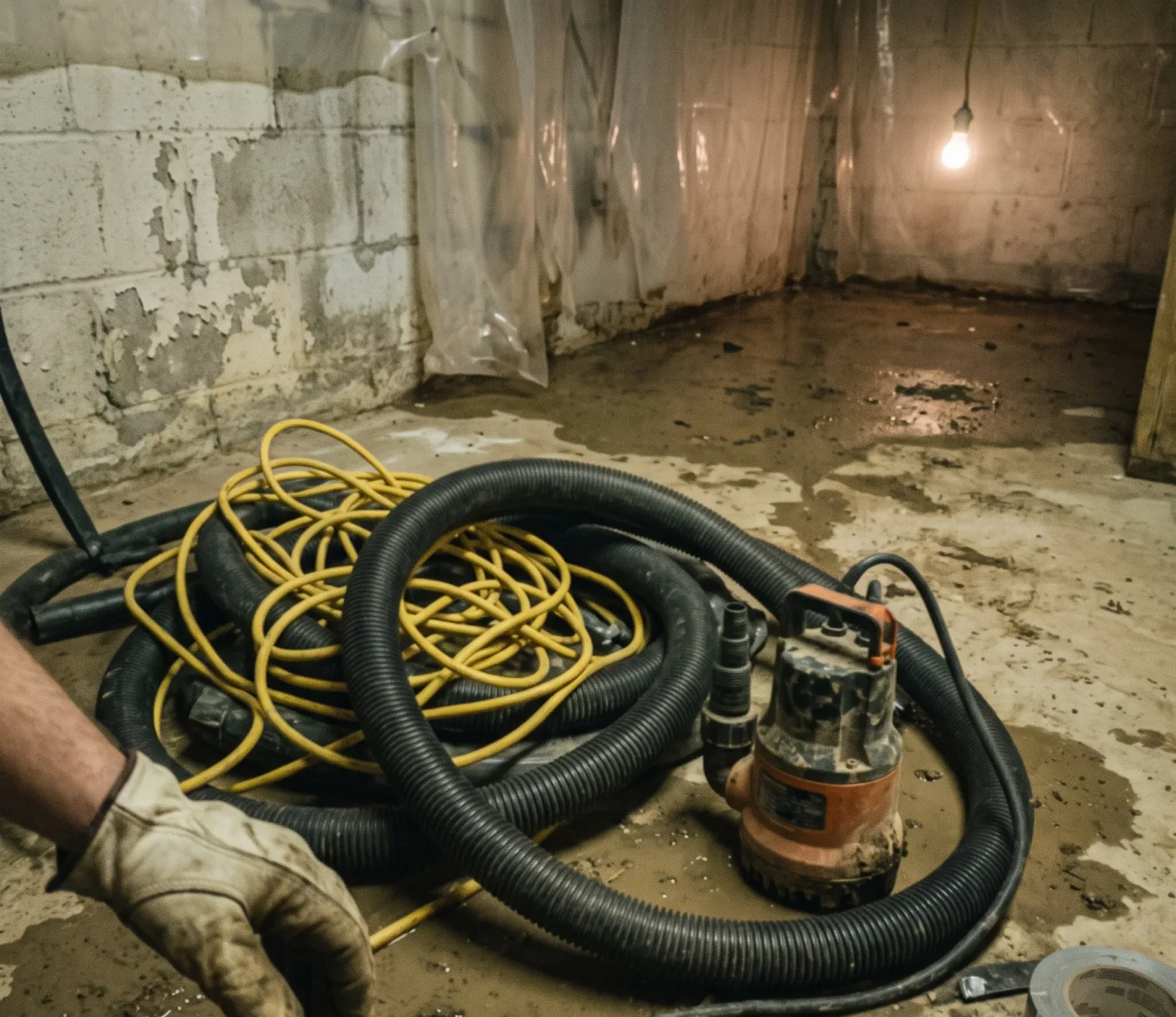
A submersible pump is a water-moving device designed to run beneath the water it removes. Its intake draws water in, and a hose carries it away from the flooded area. In Lakeville, crews may select one for a deep pool that can keep the intake covered during operation. This approach can move a large amount of water over time. The discharge hose directs the collected water away from the area being cleared.
Depth and footprint describe different parts of the job. A deep pool in one basement room may contain less water than a shallower spread across a broad floor. The water level also determines how long the intake stays covered as removal proceeds. Around Lake Marion, Orchard Lake, or South Creek, those landmarks add local context, but they do not establish a property’s exposure. The pros we connect you with can consider the actual water depth and affected area.
A pump’s intake draws water toward its moving parts, so material in the pool can change how it runs. Fine grit or loose debris may interfere with the intake or wear components. In a Lakeville home or small shop, visible fragments are a reason to assess the water and equipment fit before operation. A pump suited to clearer water may not handle debris well. The choice depends on what is present, not just how deep the water looks.
Read Depth Across the Area
The pump must sit where water can reach its intake as the level changes. A sloped or uneven floor may affect where it can operate, while stored items can block access or conceal hazards. In a Lakeville basement, the visible pool may not show what lies beneath it. The pros we connect you with assess the proposed position and the surrounding area before running equipment. Placement affects whether the intake can keep drawing water as the pool recedes.
Water leaves through a discharge hose, so its route and endpoint matter. A long or awkward path through a house or small business may affect where the equipment can sit and how the hose is managed. The destination must be suitable for the water being moved. When you review a plan in Lakeville, ask where the hose ends and what that location can accommodate. These details help clarify the proposed setup without assuming every property has the same drainage options.
Debris can make a submerged intake harder to use. Leaves, grit, or fragments may collect near the opening and interfere with water flow. The material in a basement pool or a commercial floor area therefore matters alongside depth. If the water looks cloudy or contains loose material, tell the pros we connect you with before they choose a pump. Equipment designed for clearer water may need a different approach when the intake could encounter debris.
Follow the Proposed Hose Route
As water recedes, the pool can become too shallow for a submersible pump to keep drawing effectively. The pump may remove the deeper portion while a thin film or small pockets remain along the floor. In a Lakeville property, that change marks a limit of the pump’s reach, not a measure of moisture inside materials. Debris can obstruct the intake and interrupt water flow. Moisture assessment and drying are separate concerns.
Electrical safety sets a firm boundary around pump placement and operation. Water near outlets, appliances, or wiring can make entry dangerous, and powered equipment needs a safe arrangement. Water can conceal cords or damaged connections that are difficult to see. This applies in a home or small commercial building in Lakeville. Equipment selection comes after people can access the area safely; a pump does not remove the electrical hazard by itself.
Notice When Pumping Reaches Its Limit
Stay out if electrical safety is uncertain; get qualified help. In Lakeville, a submersible pump suits deep pools when water covers its intake and the volume exceeds what a wet vacuum handles. A nearby power source and careful cord placement matter when setting up equipment around standing water. Before use, the pros we connect you with can observe depth, debris, and whether the hose has a workable route. Lake Marion, Orchard Lake, and Grand Prairie Park are local references; they cannot show indoor water conditions. If water gets shallow or debris blocks the intake, pumping may leave water behind.
Watch for a waterline that does not fall as expected or rises while the pump runs. That change can indicate that more water is entering the space than the equipment is moving. The pros we connect you with can account for the observed level and the pump’s operating conditions. Reduced flow from the hose can be another sign that extraction has slowed. Source repair is separate work, so the extraction scope should make that boundary clear.
Pump Details to Check
- Note the observed depth, affected floor area, and visible debris; these conditions help explain whether a submerged intake fits the job.
- Ask where the discharge hose will end and whether that destination suits the property and proposed setup.
- Clarify how the scope handles shallow leftovers, moisture assessment, and any drying equipment as separate work.
- Check whether the pump intake can remain unobstructed as water drops; a shifting position or trapped material can interrupt removal.
- Compare the observed depth with the area covered to discuss likely volume; deeper water across a broad room can extend pumping time.
- Trace where the hose would lead and whether the route stays open; ask what discharge options are available at your Lakeville property.
Extraction Help FAQs
When might a crew place a submersible pump in my Lakeville basement?
Crews consider a submersible pump when the pool is deep enough to keep its intake underwater and the amount of water calls for continued pumping. They also look at the affected area, debris, safe access, and discharge options. In Lakeville, the property’s actual conditions guide the equipment choice; nearby lakes or creeks do not establish a home’s water risk.
What should I look for in the proposed pump hose route?
As the pool gets shallow, the intake may no longer draw water from the floor. The amount left can depend on the floor shape and where the intake sits. The leftover water may need a separate removal method, and damp materials may need assessment and drying. These are distinct tasks from operating the pump.
Will this pump remove a thin layer or water mixed with debris?
The hose carries removed water to an endpoint that must suit the site and the amount being discharged. Its route may affect where the pump can be positioned and how work moves through a home or business. Ask the provider to identify the planned endpoint and explain how the route fits the property before comparing proposals.
Compare the Pump Plan
Share observed depth, affected rooms, and possible hose routes with the pros we connect you with when comparing pump plans.
Call (952) 866-9355